

“But you won’t have any friends!” was the first thing Michal’s mom said when he told her about our plan to move from Canada to Portugal. It was a valid concern. We were leaving behind a strong network of friends and colleagues, not to mention my family.
We didn’t have a “plan” for managing our social connections, but Michal and I were reasonably confident we would maintain connections with our closest family and friends back in Canada, while making new connections in Portugal. And we certainly have been, though some things take time.
It all may be easier if you’re moving for work or school, as you quickly meet people and are often absorbed into social circles through those environments. For the rest of us, though, meeting people who may become friends requires more intention.
There seems to be a common trajectory many people follow when they move to a new country. They start by seeking out social groups specifically for foreigners who speak their language. I saw this often in Canada, where new immigrants looked for communities that shared their language and culture to ease the transition. So it wasn’t surprising to find that here in Portugal, new arrivals do the same.
When you first arrive in a new country, finding people who speak your language and have travelled a similar path can feel like oxygen. So during our first few weeks in Porto, I eagerly sought out and attended meetups for English-speaking women.
Over time, however, I noticed that while those connections were comforting, they didn’t light up the part of me that wanted to grow and learn in this new place. I realized I was after different types of connections, so I stopped going.
Instead, Michal and I began looking for photographers, photography groups, and people offering photo walks. By joining activities centred around a hobby we both love, we began meeting people — locals as well as other foreigners. There’s something about coming together around a shared interest that breaks down barriers and sparks connection.
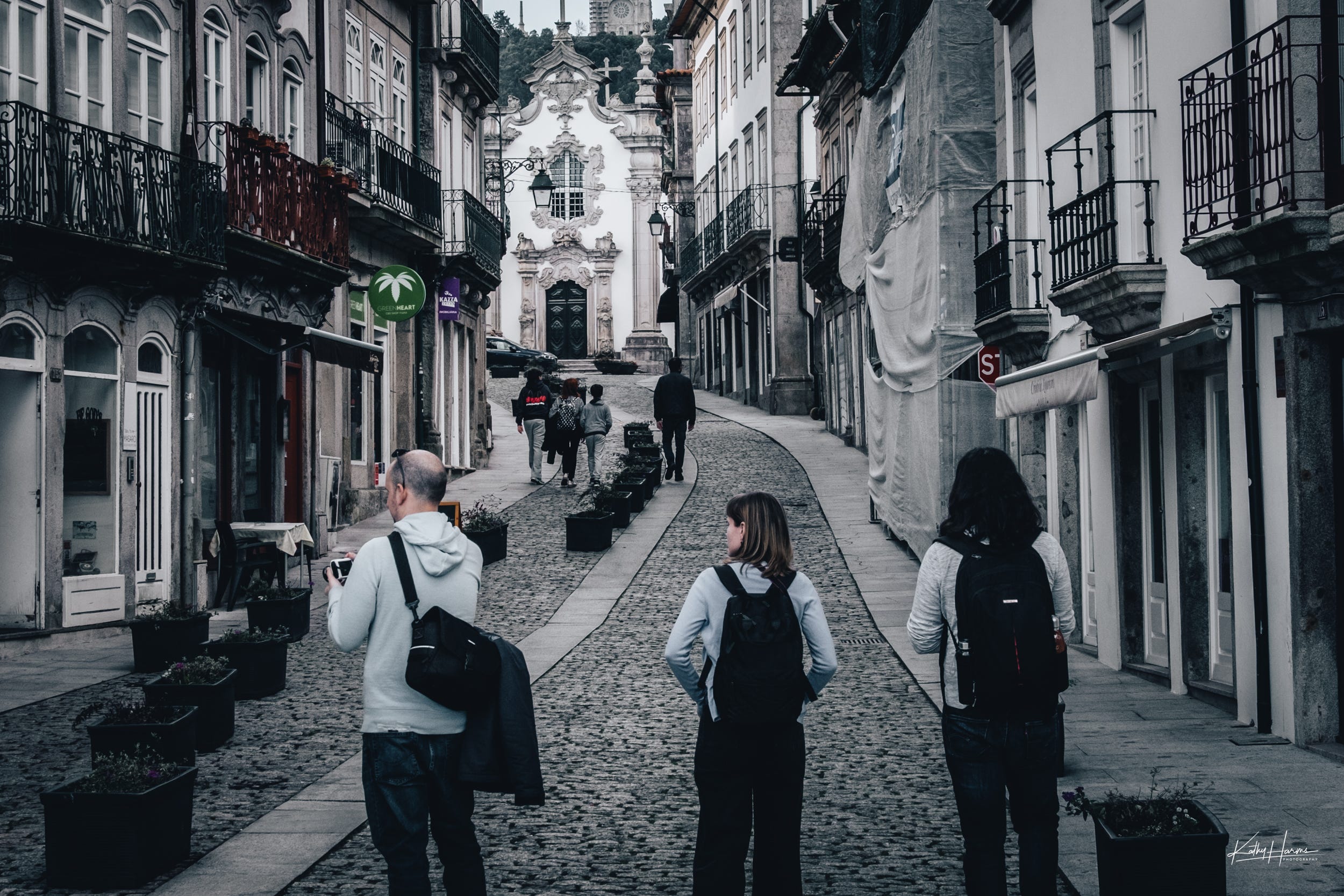
Shortly after we arrived, I also started attending writing groups. At first, these groups were primarily made up of foreigners, though over time more Portuguese writers have been joining as well. One of the groups has since grown into a social circle that extends beyond the writing sessions, and real friendships have formed.
As these new friendships began to take shape, I noticed an unexpected emotion alongside the gratitude: guilt. A quiet worry that by making space for new people, I was somehow betraying old friendships that still hold a deep place in my heart.
But thankfully, the friendships I’ve been building in Porto haven’t been erasing the ones I carried with me. They exist in different rooms of my life, connected by memory, care, and shared history.
Psychologists have long noted that friendship often grows out of simple proximity and familiarity — seeing the same people in the same places, without trying too hard. It’s not unlike how easily we make friends at work, where connection is built less on instant chemistry and more on repeated interaction over time.
Guests on the Relocurious podcast have also suggested joining fitness classes or hiking groups as ways to make local friends. Centering social connection around physical activity feels good, and it can also minimize language barriers where they exist.
In October I joined a photography workshop with a Portuguese woman I met on a photowalk. The workshop was conducted entirely in Portuguese. Did I understand everything? No. Did I understand enough to enjoy a wonderful day of creativity with a new group of photographers? Absolutely.
The idea that closeness forms more quickly when people learn, struggle, or create together is also grounded in research. The Self-Expansion Theory, developed by Arthur and Elaine Aron, suggests that relationships deepen when people engage in novel or challenging activities side by side.
I think it’s worth reiterating that new friendships don’t form overnight. There’s often a period where you meet many people before you find your community. But when you do, those relationships tend to form around who you are now, in your new home — not who you were before.
That can be unexpected, and it can also be deeply fulfilling, as you settle into the new version of yourself, in your new place.
If you’ve moved, or are thinking about moving, what interests or curiosities might help lead you toward your next community?
We would love to hear from you!
If you enjoy Relocurious posts and podcast, consider taking one of these actions today:
Follow us as a free subscriber;
Support us as a paid subscriber;
Email us to share your own relocation story; or
Forward this post to one or two friends who may be dreaming about relocating — or who are already well on their way to reinventing themselves!
And … a coffee-sized gesture of your support will bring encouragement and a smile!
This ties in so well with a piece I just wrote. There was an article that came out recently saying that 61% of US expat women over 55 leave Portugal within 18 months. Three of the five reasons given were directly linked to loneliness. Joining groups based on interests rather than nationalities creates a much stronger connection. Thank you for this!!