

You’ve stepped into your dream, parted with the old, and leapt forward. What awaits on ‘the other side’ is a new path of gradually building the life you had imagined, in a place that is new and different and maybe a little scary (or not yet, it’s early days).
It’s perfectly fine to sit with the pride for actually grabbing life by the horns — not everyone does. And it’s likely energizing to realize that new possibilities are more within reach than ever before! You’ve arrived — explore with all your senses, until you no longer feel like a tourist being sold a curated hop-on-hop-off experience.
You finally have a chance to gradually become someone who can live here. By making the big move in your life and arriving in a new place, you have changed the scenery. Now the scenery will try to change you. You may try to fight it, or work with it: This is where your intentional self-reinvention becomes a daily practice, a discipline.
Swings of Emotions
We refer to this stage of relocating as re-rooting. Our podcast guests hint at re-rooting being slow, gradual, and not linear. Moments come when people who have moved feel entirely “in it” as they stroll through their new neighbourhood. The rhythm of the new language starts to feel familiar, and it is comforting to grow new routines like shopping at a grocery market or being recognized at a local diner.
And then, the pendulum swings the other way, and a strong sense of “dislocation” comes out of nowhere. There are the awkward early social encounters: people speaking too formally, or too casually, or making the wrong assumptions about where you came from, or why you are staying. There is the discovery that being surrounded by friendly faces and easily meeting acquaintances is not the same as making true friends. Many get caught between wanting to “fit” and wanting to stay true to the parts of themselves that feel non-negotiable, some of which may be deeply cultural.
Months after arrival, grief may pay a visit suddenly, triggered by a memory of the old “home”, or your not being able to find a favourite food item in local stores, or by encountering a unfamiliar, stubborn, and “hard to believe” bureaucratic process.
None of these are failures of preparation. They are simply about re-rooting taking time. The soil is different, the sun is different, the nutrients are different. A lot is taking place in your life that takes a mix of trial and error, settling, and stabilizing. Some of the old memories will keep coming back: progressively as sentiments that bring a smile in a private moment, rather than emotional overwhelm and dysfunction.
Micro-Roots
One day, something small (a local café, a nearby beach, a familiar weekly ritual) will become a new anchor. It won’t be quite the same as having a fully grown social network, or having finally mastered the new language, but it will be something reliably yours. You may think of these new anchors as micro-roots: small, stabilizing routines and places that help your larger identity work gently unfold in the new place.
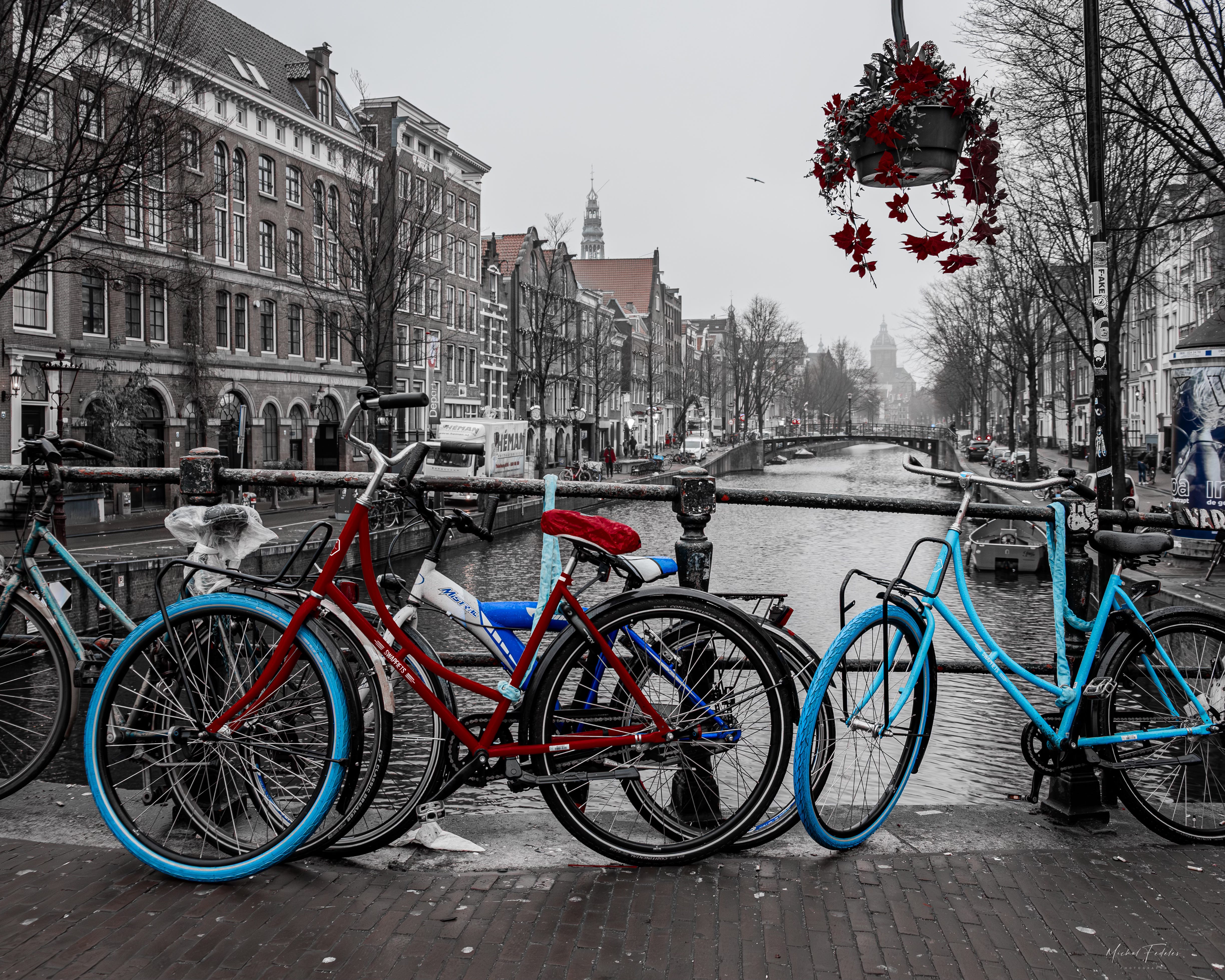
There will come a moment when someone new truly becomes “your person” in your new country. Sparked by a relationship formed through work, a hobby, or a powerful joint experience — or simply through introductions by another expat who had arrived before you. Or a friendly local guide. Or a neighbour, or someone who you met while cycling around town and taking pictures, that led to a conversation. People like that become your new anchors, ties to the place you may already be calling “home”.
You 2.0
If you pay attention (or ask a close friend to share their observations of you), you may start to notice subtle shifts in yourself: You may be becoming more flexible, more patient with ambiguity (and bureaucracy), more grounded, perhaps more aware of your privilege and perspective. These “noticings” often prompt deep reflections that eventually lend themselves to what adult development expert Robert Kegan calls the self-authoring mind. We realize who we really are, when we are no longer subject to being defined by other people. Parents and friends tend to mean well, yet the distance and newly gained autonomy can help us develop a fuller appreciation for what our life can be like — what we give our time and energy to, and what we create — when we truly are the ones at the helm. It’s not about disregarding others’ beliefs or advice, but it is about more fully honouring our own truths, desires, and sense of purpose in life.
The notion of narrative identity (the story of our life that we tell ourselves and others that gives us a sense of unity and purpose) and social psychology also point to our identity being shaped by context, and new contexts giving rise to our new possible selves. Re-rooting in a new place, both distant from the old one and stimulatingly different in many regards, is where we often meet the new possibility for ourselves.
Ambiguity, Change, and Growth
And yet, how the re-rooting unfolds varies from person to person. Some of us will instantly fall in love with the adventure and the newness and the unknown. Others — especially if you are not a fan of uncertainty — may have a harder time. But if you are open to the idea that your capacity to live with ambiguity is not a trait but a muscle, bit by bit you will find answers, certainties, predictabilities that will help you build your new routines while continuing to “test” your new world in little experiments, growing progressively flexible, and perhaps even finding joy in your gradual successes.
And as things in your life are settling, both elation and despair will likely weaken. Psychologists suggest journalling about these experiences and naming the ups and downs. Then, see if you can intentionally redirect your attention to the ups, and note them with gratitude (“count your blessings”). Chances are, such exercises can help you discover and cherish your life’s many beautiful moments and fulfilling experiences.
Your Self-Reinvention
See which of these micro-rooting practices resonate, and build them into your day:
Expect the dip. Just know it’s coming; it’s a part of the experience of re-rooting.
Find or create small anchors:
a weekly ritual (with others or alone);
a place that feels welcoming;
a sensory anchor (music, walking route, café); or
a community space (gym, studio, local shop).
Invest early in weak ties. These are connections that may not (yet) be full-blown friendships, but that build your social network. Weak ties are the first roots; strong ties grow later. Emphasize the power of saying “yes” to small invitations.
Honour the grief when it comes. Grief means something that is dear to you, from the past or from another place, is on your mind. It is a sign of love and attachment and caring. Cherish the moment.
Track the shifts in yourself. Once a week or two, write down three ways in which you are becoming someone ‘who can live here’. These small yet powerful shifts are likely to arrive before you notice you have begun to feel truly at home.
Practice patience and self-care. Out of the five stages of relocating, re-rooting is perhaps the longest and least glamorous. Yet, it is also the most transformative one.
What Now?
Re-rooting isn’t about recreating what you had. It’s about growing what you need now. It’s the slow art of becoming someone who can thrive in a place that is shaping you as much as you are shaping it. Your self-reinvention deepens in the quiet repetition of choosing this life, this place, this becoming.
If you enjoy Relocurious posts and podcast, consider taking one of these actions today:
Follow us as a free subscriber;
Support us as a paid subscriber;
Email us to share your own relocation story; or
Forward this post to one or two friends who may be dreaming about relocating — or who are already well on their way to reinventing themselves!
And … a coffee-sized gesture of your support will bring encouragement and a smile!